Why Your Carry-On Choice Decides How the Flight Feels
Quick Answer: Underseat space is roughly 30cm deep and it is the same space your feet and shins need. A hard-sided bag takes all of it and cannot be compressed; a soft bag can be squashed flat or pushed to one side. For a tall traveller on a short-haul flight, choosing a soft, flat personal item and putting everything else overhead is worth more comfort than any seat selection short of an exit row.
You can pay for extra legroom. You can also stop giving your legroom away.
Most people give away a third of it before the plane has left the gate.
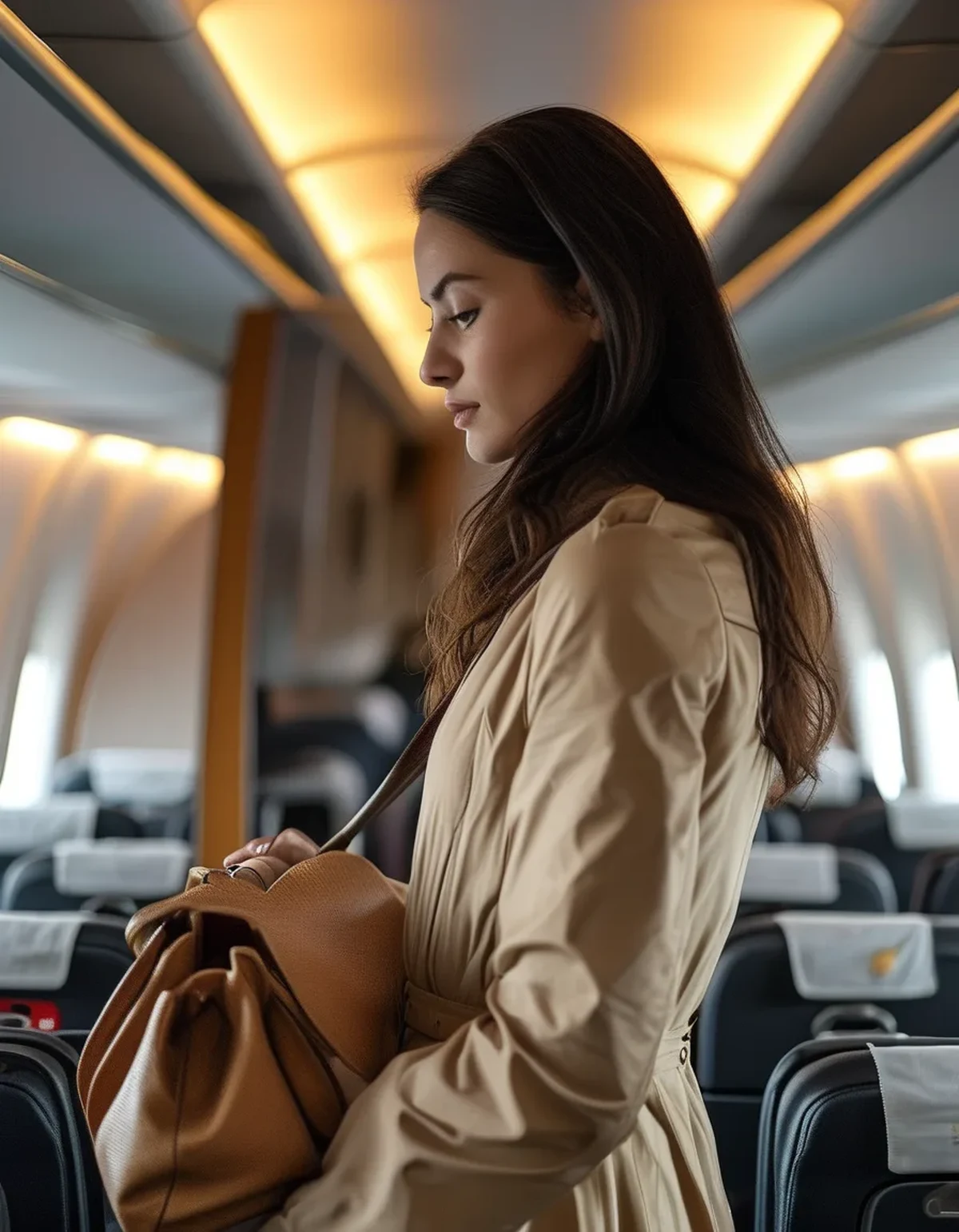
How much space is actually at stake?
More than the dimensions suggest, because it is exactly the space your body wants.
Typical economy seat pitch is 71-79cm. Your knees need most of it. The underseat area is around 30cm deep, 40cm wide and 25-30cm high, and it sits precisely where your feet and shins go.
A hard-shell cabin bag occupies all of it and cannot yield. Your feet end up on top of the bag, which raises your knees, which pushes them into the seat in front, which is the specific complaint every tall passenger has.
A soft bag can be reshaped. Pushed flat, squashed to one side, or slid forward against the seat frame, a soft bag frequently gives back 10-15cm of usable depth — which on a 76cm pitch is roughly a 20% improvement in the space available to your legs.
Foot position matters more than it sounds. Being able to put your feet flat on the floor, rather than on a bag, allows your knees to sit lower and lets you change position through the flight. Static knee flexion for three hours is what produces the stiffness and the swollen ankles.
The other half of the calculation is your knees against the seatback. Once your feet are down and your knees are as low as they can go, the remaining constraint is the seat in front — and that is where the recline of the passenger ahead becomes a genuine problem rather than an annoyance.
What should a tall traveller actually pack?
Different bags for different jobs, decided before you pack rather than at the gate.
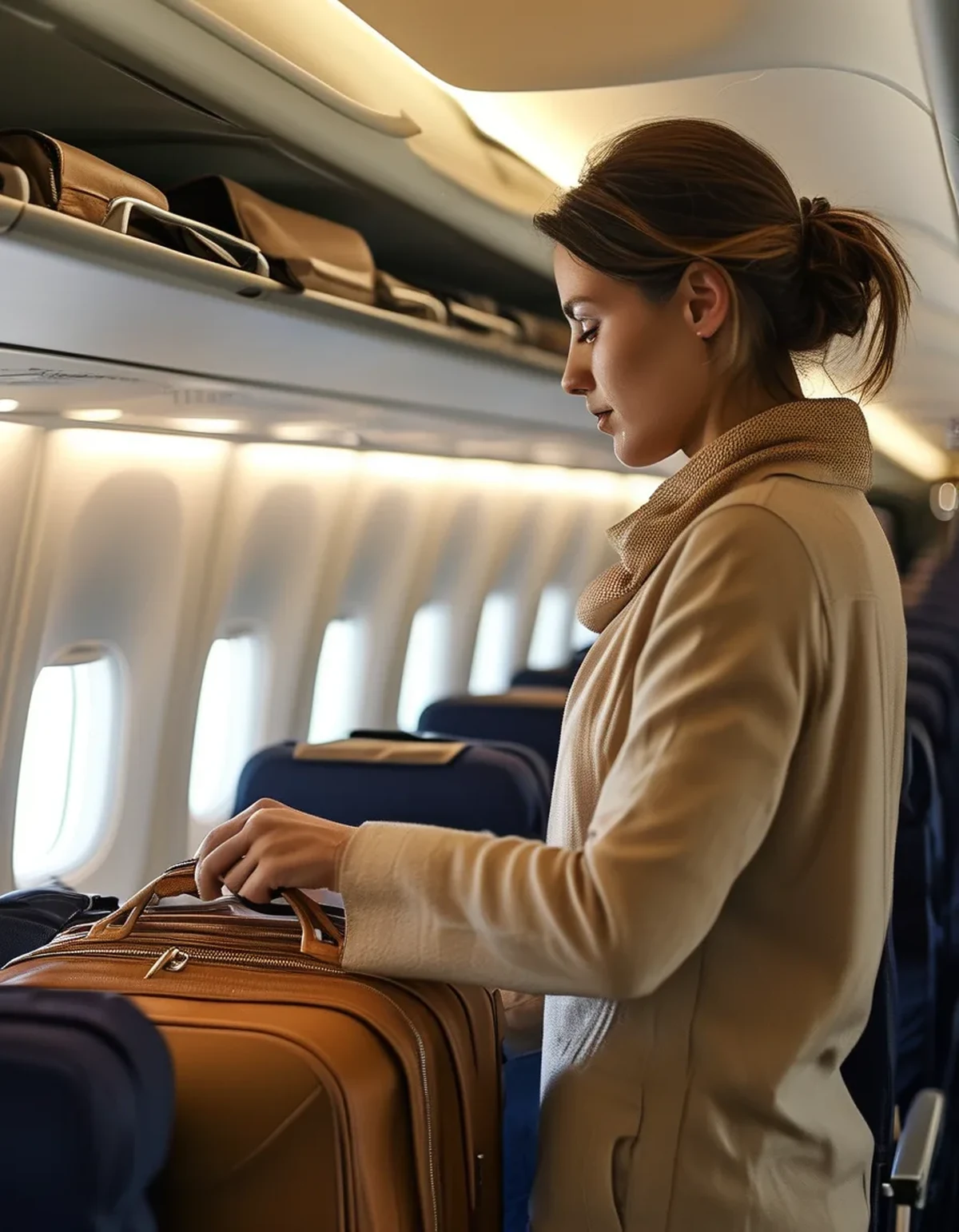
Everything you do not need in flight goes overhead, without exception. This is the single decision that matters. The instinct to keep your bag with you costs you the whole underseat space for the sake of convenience you will use twice.
Carry a genuinely flat personal item. A slim backpack or a folder-style tote that can go flat under your feet, or better, stay in the seat pocket and on your lap. Choose it by thickness rather than volume.
Take out what you need before you sit down. Book, headphones, water, medication, a layer. Two minutes at the gate means the bag goes overhead and stays there.
Avoid the hard-shell underseat trolley entirely. They are sold as maximising cabin allowance, and they are the worst possible choice for a tall passenger, because they are rigid, exactly the size of the space, and impossible to compress.
Wear the bulky layer rather than packing it. A coat takes an enormous amount of bag volume and takes none at all when worn or folded into the overhead. This matters more in autumn, when you are travelling with outerwear you will not need in the air.
And pick shoes you can loosen. Feet swell in flight, and shoes that are comfortable on the ground and tight at altitude are a small misery in a seat you cannot get out of easily.
What Nobody Tells You About Tall Flying
Bulkhead is not automatically better. It has no seat in front to press your knees into, and it also has a fixed barrier that prevents stretching your legs out, and the underseat storage is usually unavailable for take-off and landing. For genuinely long legs, an exit row usually beats a bulkhead, but check whether the exit row seats recline — many do not.
Aisle seats are a mixed blessing. You get to stretch one leg out, and you get hit by the trolley and by every passing shoulder. Many tall travellers find a window seat with the ability to angle their legs toward the window more comfortable than an aisle, particularly on shorter flights.
Seat maps lie about pitch. The airline’s stated pitch is an average, and specific rows — in front of exits, at the back, near galleys — often have several centimetres less. Third-party seat map sites that document row-by-row differences are genuinely worth ten minutes before a long flight.
Check in early for the specific row, not just any seat. The good rows for tall passengers are known and go quickly, and the difference between row 12 and row 13 can be larger than the difference between two airlines.
Short flights can be worse than long ones. Regional aircraft frequently have less pitch than long-haul, and there is no opportunity to walk around. A ninety-minute regional hop can be considerably more uncomfortable than a seven-hour flight in a wide-body.
And the boarding order matters for the overhead. Boarding late means the lockers near your seat are full, which means your bag goes elsewhere, which means you may end up keeping it under your feet after all. For a tall passenger, boarding in an earlier group is worth more than it is for anyone else.
What about the rest of the journey?
The flight gets all the attention and is often not the worst part.
The transfer is usually harder than the flight. Rideshare back seats, airport shuttle buses and regional trains are all designed to a tighter standard than aircraft. Booking a larger vehicle class for airport transfers is a small cost that removes a reliable irritation, and it is worth checking the specific vehicle rather than the category name.
Rental cars need checking, not assuming. Category names tell you about boot space, not about driver legroom or seat travel. Checking that the driver’s seat has enough rearward travel, and that the roof allows a comfortable seating position, is a two-minute job at the desk that prevents a week of discomfort.
Hotel rooms have a known tall problem list: shower heads, bed length, desk height and the bathroom mirror. Asking at booking whether the rooms have longer beds is more effective than asking at check-in, and some chains will note it on the reservation.
Autumn city breaks are the good ones. Cooler weather means less standing about in heat, walking is more comfortable, and the trains and flights are quieter — which for a tall traveller specifically means a better chance of an empty adjacent seat, which is worth more than any other single variable.
And build in the stretch. Long travel days produce hip flexor and lower back stiffness that lasts into the trip. Five minutes of hip flexor stretching and thoracic rotation on arrival is disproportionately effective, and walking for twenty minutes on arrival beats lying down.
Practical health note rather than medical advice: prolonged immobility in a cramped position is a genuine risk factor for circulation problems on long flights. Move regularly, hydrate, and if you have any relevant risk factors, discuss compression stockings with a pharmacist or doctor before travelling.
FAQ: Tall Travel, Answered
Is paying for extra legroom worth it?
On flights over about three hours, almost always. The honest calculation is what you would pay to avoid three hours of discomfort, and for most tall travellers the answer is comfortably more than the airline charges. On short hops, choosing the right row and packing correctly often gets you most of the benefit for nothing.
What is the single best row on a typical narrow-body?
The exit row, if it reclines, and otherwise the row immediately behind the exit row, which frequently has extra pitch without the non-reclining penalty. Bulkhead is situational. Avoid the last row, which usually has both reduced pitch and limited recline.
Can I ask to move to an empty exit row after boarding?
Often yes, and crew are generally accommodating once boarding is complete, particularly if you ask politely and are willing to meet the exit row requirements. Asking before the doors close is better than after, and offering to pay if it is a paid seat is usually unnecessary but occasionally required.
TL;DR:
- Underseat space is the same space your feet and shins need, and a hard-shell bag takes all of it irreversibly.
- Put everything overhead, carry one genuinely flat personal item, and take out what you need before you sit down.
- Exit rows usually beat bulkheads for long legs; check whether they recline, and check row-by-row pitch rather than the airline average.
- Board earlier than you otherwise would, so the overhead near your seat is still available.
- Transfers and rental cars are often worse than the flight — check driver seat travel and book a larger transfer vehicle.
The flight comfort question gets treated as something you either pay to solve or endure. A large part of it is a packing decision made an hour earlier, and that part is free.
Keep Reading
This article is for general informational and styling purposes only. Fit, sizing, and product availability may vary.
