Why the Aisle Seat Is Worse Than You Think for Tall Travelers
Quick Answer: The aisle gives you somewhere to extend a leg, but it also exposes your shoulder and knee to cart and passenger traffic, forces you to wake for seatmates, and offers no head support. On flights over six hours, a window seat plus a strategic exit-row or bulkhead choice usually beats a standard aisle.
Every frequent flyer forum says the same thing: tall people take the aisle. And for a three-hour hop it is right.
On an overnight to Europe, that same advice is why you land with a sore shoulder and four hours of broken sleep.
What does the aisle actually give you?
One genuine benefit: lateral leg extension. You can angle a leg into the aisle, which relieves the fixed knee angle that causes most of the discomfort in a standard economy seat.
That is real and it matters. Sustained knee flexion at a fixed angle for hours reduces circulation and creates stiffness, and being able to straighten periodically is meaningfully better than not.
You also get freedom of movement — up whenever you want, no negotiation.
But notice what the benefit is conditional on: the aisle being clear. On a full flight with a service cart, a queue for the lavatory, and passengers moving through, your extended leg spends most of the flight retracted anyway. The benefit is intermittent; the costs below are constant.
What does the aisle cost you?
Four things, and they scale with flight length.
Impact exposure. Your shoulder and knee sit in the traffic lane. Service carts have roughly 1 to 2 inches of clearance from an aisle seat’s armrest, and shoulders on a tall frame sit wider and higher. Getting clipped repeatedly is not a myth; it is geometry.
Interruption. In a three-seat row, you will be woken by both seatmates. On an overnight, that is potentially four wake-ups you did not choose.
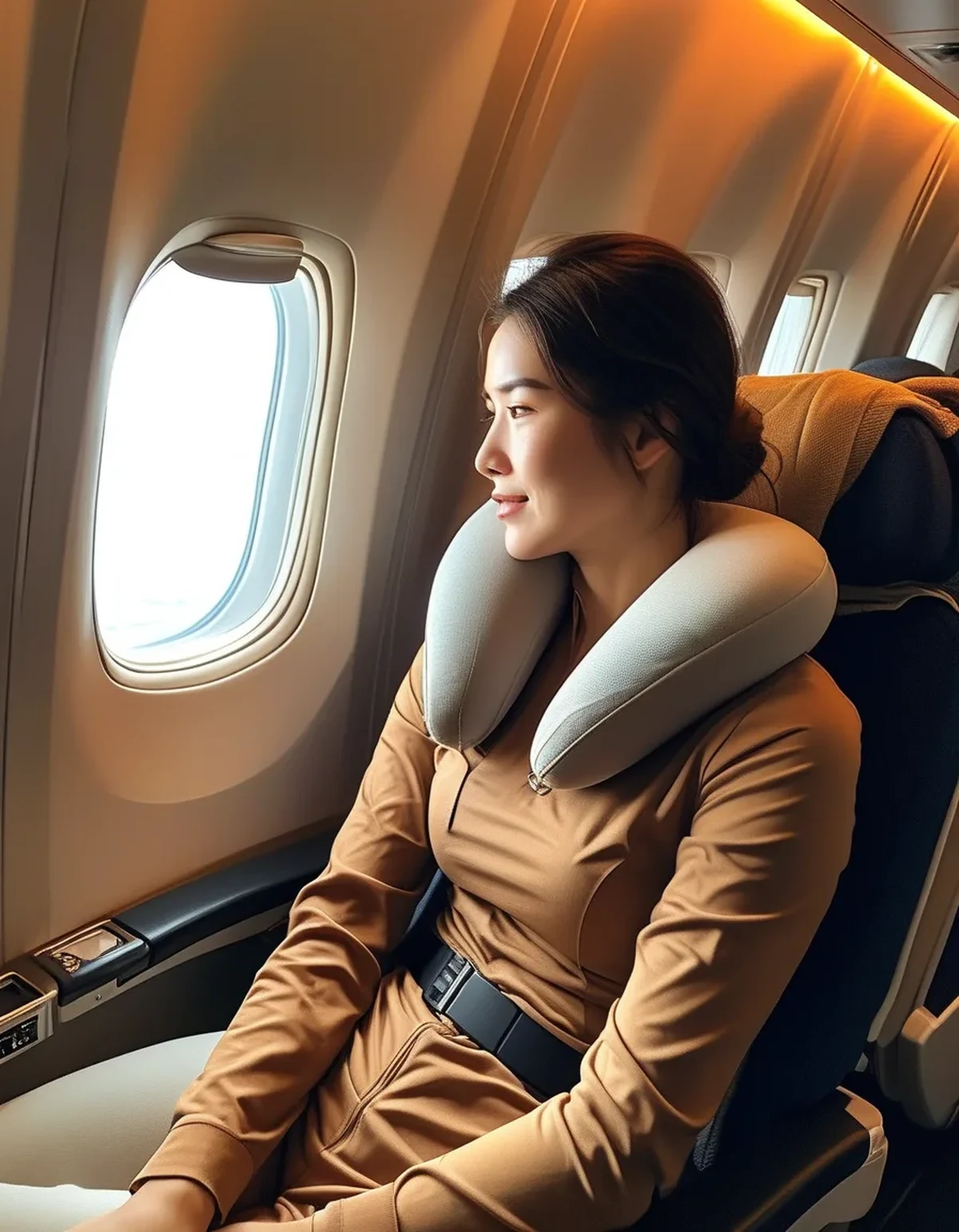
No head support. This is the biggest one for sleep. A window gives you a wall to lean against, which is the only reliable head support in economy. In the aisle, your head has nowhere to go, and a nodding head wakes you every few minutes.
Lean asymmetry. Without a wall, you naturally lean toward the aisle side, which puts a sustained side-bend in your neck and shoulder for hours.
Myth vs Fact: seat selection for tall travelers
Myth: Aisle is always right if you are tall. Fact: It is right for flights under about 4 hours, where legroom dominates and sleep does not matter. Beyond that, the calculus flips toward whatever lets you sleep.
Myth: Exit rows are always the most legroom. Fact: Some exit rows have restricted recline, fixed armrests that reduce seat width, and misaligned window positions. Check a seat map site for the specific aircraft rather than assuming.
Myth: Bulkhead is the best legroom seat. Fact: Bulkhead gives floor space but nowhere to stretch under a seat, which is what actually relieves a long leg. Many tall travelers prefer a normal row where they can slide feet forward.
Myth: Premium economy is not worth the money. Fact: For a traveler over about 6 feet on a flight over 8 hours, the 3 to 5 inches of extra pitch is the single highest-value upgrade available, and it is usually far cheaper than business class.

What is the actual best seat strategy by flight length?
Match the choice to what you need most on that specific flight.
Under 3 hours — aisle. You will not sleep, legroom is everything, and interruptions are few.
3 to 6 hours — exit row aisle if available, otherwise aisle. Verify recline and armrest details first.
Over 6 hours, overnight — window, ideally exit row or premium economy. Head support and uninterrupted sleep outrank intermittent leg extension. Take the wall.
Over 6 hours, daytime — aisle. You will be awake and moving; legroom wins again.
Any red-eye — window, always.
Two more rules that matter more than the letter on your boarding pass: book a seat in front of an exit row only after checking recline, and avoid the last row, where recline is often blocked and lavatory traffic is constant.
Also worth doing: check the seat map 24 hours before departure. Blocked seats often open at check-in, and exit rows are frequently released free of charge at that point.
What else changes long-haul comfort for a long frame?
Seat choice is one variable. These are the others worth optimizing.
Under-seat space is your legroom. Put nothing under the seat in front of you on a long flight. A backpack there costs you the entire foot well. Store it overhead and keep a thin pouch with essentials.
A footrest changes knee angle. An inflatable footrest or even a folded jacket under your heels raises the knee slightly and relieves the sustained flexion that causes stiffness. Cheap and disproportionately effective.
Move every 90 minutes. Circulation, not muscle, is the issue. A 2 minute walk and ten calf raises at the galley makes a measurable difference to how you feel on landing.
Compression socks. Genuinely useful on flights over 6 hours, particularly for taller travelers whose venous return has further to travel. 15 to 20 mmHg is the standard travel grade.
Hydrate deliberately. Cabin humidity runs around 10 to 20 percent. Aim for roughly 8 oz per hour, which also forces the walking you should be doing anyway.
This is general information, not medical advice. If you have a history of clotting disorders or circulation issues, talk to a clinician before long flights.

FAQ: Tall Air Travel Questions, Answered
Is it worth paying for seat selection?
For anyone over about 6 feet on a flight over 4 hours, yes. The $30 to $80 fee is small relative to arriving functional, and it removes the middle-seat risk entirely.
Which side of the plane is better?
On most narrowbody aircraft it is symmetrical, but on some widebodies the window seats on one side have slightly more shoulder room due to curvature and window alignment. Check a detailed seat map for your specific aircraft.
Do bulkhead seats work for tall travelers with long legs?
Mixed. You get floor space but cannot extend under a seat, and tray tables in the armrest reduce seat width. If your discomfort is knees, bulkhead helps; if it is total leg length, a standard row often feels better.
TL;DR:
- The aisle’s benefit is intermittent leg extension; its costs — cart impacts, wake-ups, and no head support — are constant.
- Over about six hours, especially overnight, the window’s wall support beats the aisle’s legroom.
- Verify exit-row recline and armrest details before booking; not all are equal.
- Keep the foot well empty, use a footrest, move every 90 minutes, and wear compression socks on long-haul.
The blanket advice to always take the aisle was written for short flights. Sort your seat choice by flight length and time of day instead, and the overnight that used to wreck you becomes merely long.
Keep Reading
This article is for general informational and styling purposes only. Fit, sizing, and product availability may vary.
